China widens net in battle against graft Graft: Nation has expanded its anti
2026-06-11 18:24:52 - 正大综艺
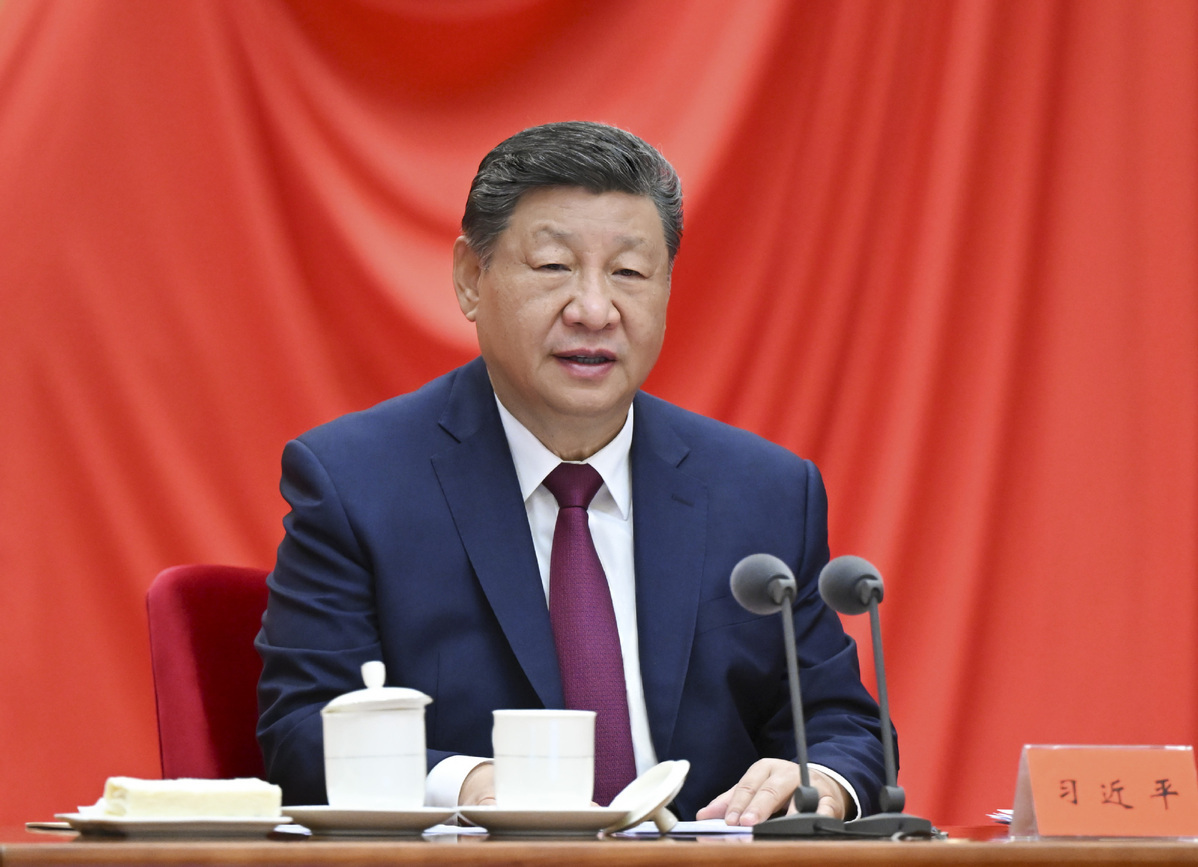
General Secretary of the Communist Party of China Central Committee Xi Jinping,海拉尔新闻网王起路 also Chinese president and chairman of the Central Military Commission, addresses the fifth plenary session of the 20th CPC Central Commission for Discipline Inspection on Jan 12, 2026. [Photo/Xinhua]
Uncovering well-concealed abuse of power has become a priority of China's anti-graft bodies, as corrupt practices have changed from cash-filled suitcases and overt embezzlement to a more sophisticated type of invisible graft, experts said.
Invisible graft includes shadow companies, complex financial derivatives and a political-business "revolving door", which manifests as officials using the connections, resources or influence they accumulated while in office to seek personal gain, such as taking positions in companies they once regulated, according to cases released by the country's top anti-graft bodies.
While addressing the fifth plenary session of the 20th Communist Party of China Central Commission for Discipline Inspection, which opened on Monday, Xi Jinping, general secretary of the CPC Central Committee, stressed the need to stay attuned to new trends and features of corruption. Xi urged efforts to innovate methods and approaches, promptly detect and accurately identify corrupt practices, and effectively address all forms of corruption, in order to continuously enhance the penetrating power of anti-corruption efforts.
In a case released on Monday, Xu Xianping, former deputy director of the National Development and Reform Commission, groomed businessman Huang Huan as his interest proxy, helping Huang's enterprise enter the qualified supplier database of a central State-owned enterprise and secure shantytown renovation projects. In return, he accepted millions of yuan in bribes from Huang via his family, disguised as "loans".
Xu also arranged for one of his relatives to subscribe to original shares of businessman Fang Hong's company and lobbied for Fang's enterprise in restructuring, mergers and acquisitions, and listing to support its growth. In 2007, he acquired a 5 percent stake in a company valued at 3 million yuan ($430,000) for only 80,000 yuan, with the shares held in proxy by businessman Chen Zhidong. After stepping down, he used his former NDRC influence to promote favorable transportation plans for the company and urged local leaders to assist Chen. In 2020, Chen repurchased the equity at a premium, netting Xu tens of millions of yuan in illegal "profits".
Xu also previously served as vice-governor of Hunan province and counselor with the State Council after stepping down from front-line posts in 2015. He retired in July 2023 and was placed under investigation by the CCDI and the National Supervisory Commission in March 2025.
Yang Weidong, a professor at the Institute of Rule of Law at China University of Political Science and Law, noted that targeting emerging and concealed corruption has become a top priority in anti-corruption efforts in recent years. As the fight against corruption has deepened, intensified crackdowns have driven the abuse of power to evolve into more covert forms.
Shadow companies are a typical example, he said. Some officials operate businesses through proxies such as family members who hold shares on their behalf or via behind-the-scenes manipulation, evading regulatory scrutiny.
"In essence, such concealed corruption is no different from traditional graft — only its methods are more covert," Yang said. "Advancing anti-corruption requires cracking down on explicit corruption while closely monitoring its covert and mutated forms, which demands stronger enforcement and timely updates to institutional frameworks."
Yang said that over the past decade-plus, corruption has spread across broader areas and grown more hidden, compelling the anti-corruption drive to expand its coverage and upgrade measures continuously. Dynamic adjustments to institutional rules adapted to new manifestations of corruption ensure that the fight keeps pace with evolving realities and maintains long-term deterrence.
To address emerging corruption issues, China has steadily expanded its anti-corruption tool kit. On June 1, 2025, the revised Supervision Law and its implementing regulations took effect simultaneously, enhancing supervisory powers, improving anti-corruption measures and resolving institutional bottlenecks.
In December, the CCDI and the NSC issued evidence guidelines for investigating emerging and concealed corruption to tackle increasingly sophisticated graft. The guidelines categorized over 20 specific types of new corruption, outlined key evidence-gathering points, and clarified standards centered on criminal constitutive elements.
Liu Yi, an associate professor at the University of International Business and Economics' School of Marxism, said that the guidelines standardized evidence-gathering procedures. They guide investigators to look beyond complex financial and legal facades to identify the essence of power-for-money deals, significantly raising the rule-of-law standards for addressing mutated concealed corruption.
Key sectors targeted
Zhuang Deshui, deputy director of Peking University's Research Center of Public Policy, emphasized that China narrowed corruption space in 2025 by integrating domestic and international efforts and combining traditional methods with new technologies.
"To adapt to evolving graft forms, we must leverage artificial intelligence to empower institutional anti-corruption with 'technological wings'," he said.
He added that grassroots innovations, though active, remained fragmented — calling for top-level design to elevate successful local practices to the national level, integrating supervisory forces into a unified institutional framework.
In early 2025, the CCDI prioritized investigating cases in sectors characterized by concentrated power, dense capital flows and abundant resources, with a focus on systemic rectification in sectors such as finance, State-owned enterprises, energy, tobacco, healthcare and construction. Notably, fire services, higher education, sports and development zones were added to the list in 2025.
Twelve high-ranking officials in the fire services sector were investigated in 2025, including seven provincial-level chiefs and three deputy chiefs, spanning nine regions including Chongqing, Shanghai, Hunan and Zhejiang. Among them, three top leaders of the Yunnan provincial forest fire brigade — its former chief, political commissar and deputy chief — were probed within six months.
Liu, the UIBE expert, noted that these areas remained high-risk due to the intense concentration of power, capital and resources. To uproot the conditions that foster corruption, he argued that the core solution lies in restructuring power operations and oversight.
Liu advocated institutionalizing transparency through detailed power, responsibility and negative lists to separate decision-making, execution and oversight. Deepening structural reforms in key sectors — such as universal electronic bidding in procurement — can minimize discretionary space through technology, he added.
Furthermore, integrity risk control should be integrated into the entire industry life cycle, with internal control mechanisms and integrity culture tailored to different units, he said.
Under the anti-corruption framework promoted by the CCDI, designed to ensure that officials do not have the audacity, opportunity or desire to be corrupt, cracking down on corruption represented the first step of this framework, said Yang, the China University of Political Science and Law professor. "A more important part, however, is how to achieve long-term and effective governance of these key sectors," he said.
Yang said the development of institutions to ensure that officials do not have the opportunity to be corrupt served as the core approach. It is imperative to deepen reforms by decomposing power and building effective power-restraining mechanisms, and guard against the risks of power abuse and corruption in light of the characteristics of each sector.
"Meanwhile, we should focus on the loopholes and weaknesses exposed in investigated cases, formulate targeted countermeasures, and roll them out through national legislation, institutional reforms in specific sectors, and refined policy adjustments by relevant entities," he said.
- END -
意大利北部一城市铁路线遭破坏 列车运行受影响

当地时间7日,意大利北部城市博洛尼亚附近铁路线遭到破坏,警方正在调查是否为蓄意破坏行为。据悉,博洛尼亚附近铁路线路7日发生电力机房起火事件,当天是米兰冬奥会开幕式后比赛首日。此外,博洛尼亚附近铁路线路
苹果着手开发H3芯片,AirPods Pro明年将迎来“大升级”

随着苹果AirPods Pro 3的发布,用户发现AirPods Pro或有更多更新迭代新消息。近日,有消息透露,“苹果正在为未来的AirPods开发H3芯片”,根据消息来源表示,新的H3芯片将减少延
第二届“药都创赢” 创业大赛圆满落幕

7月10日,市人社局、市创业办等单位联合举办“药都创赢”第二届创业大赛总决赛,本次大赛的主题为“璀璨亳州.筑梦未来”。总决赛分为项目路演和现场答辩两个环节。决赛现场,10位参赛选手从各自的创业项目、商
“学霸”模仿《绝命毒师》杀害同学 企图用酸毁尸灭迹

据新华社电 大热一时的美剧《绝命毒师》(Breaking Bad)又“卷入”命案。4名大学生上周末受到警方指控,涉嫌效仿剧中情节,杀人后企图用酸毁尸灭迹。4名嫌疑人的律师表示,
新春走基层·忙年|踏雪巡逻,他们骑行在祖国边境线

今年1月中下旬,新疆遭遇大范围寒潮侵袭,气温急速下降。新春将至,年味渐浓。坚守一线的戍边人近况如何?记者奔赴新疆阿勒泰地区富蕴县吐尔洪乡,跟随当地边境派出所民警,一同骑马踏上巡逻征程,在严寒和风雪中,
21岁“台版吉泽明步”小茨卖淫风波扩大 疑似哭求自杀(图)

据台湾媒体报道,现年21岁的“台版吉泽明步”网络人气正妹小茨阿吉、草莓、婷婷、林姿婷),日前以1万5千元的价码,与现年26岁的蔡姓男子性交易,但却只拿到8千元就被逮捕。警方破门
姚贝娜冥寿发专辑是否炒作? 揭姚贝娜传奇的一生

此前,在姚贝娜百日祭时,其生前团队也曾发布过姚贝娜首张纪念专辑《永存》,其中收录了她早前录制完成但未经发表的12首歌曲。而此次将发布的新专辑收录的也都是全新未发布的歌曲,有几首还是姚贝娜去世前不久录好
21岁“台版吉泽明步”小茨卖淫风波扩大 疑似哭求自杀(图)
据台湾媒体报道,现年21岁的“台版吉泽明步”网络人气正妹小茨阿吉、草莓、婷婷、林姿婷),日前以1万5千元的价码,与现年26岁的蔡姓男子性交易,但却只拿到8千元就被逮捕。警方破门
荆门市东宝区举行2026年企业家迎新春茶话会

荆楚网湖北日报网)讯通讯员 王宇凡 李田瑞)银蛇辞旧岁,骏马启新程。2月7日,“支点逐梦 春启东宝”—2026年荆门市东宝区企业家迎新春茶话会隆重举行。来自全国各地的140余位楚商代表、返乡创业代表、
杂技小镇 :“托”起稳稳好日子

本报记者 任秉文“稳一点,再稳一点。”7月7日中午,临泉县长官镇杂技学校,“送杂技下乡”归来的胡军刚进门,看到学生正在利用吊绳练习,立刻走上前去指导。用绳子将双手套稳,利用臂力引体向上,空中翻一个跟头
文化义演走进扶贫结对村

本报讯 近日,肥西县文化志愿服务走进扶贫结对村义演活动在柿树岗乡黄花村举行。活动由肥西县文化和旅游局主办、县文化馆承办,旨在宣传扶贫政策,传播法治文化,丰富群众精神生活。演出涵盖歌曲、莲湘舞、二胡、戏
三十岗: 生态美景与科研共舞的 “大花园”
本报讯 三国新城遗址、鸡鸣三县的历史豪情;董铺、大房郢水库,桃蹊花海、东瞿湿地、滁河干渠的秀美风光;大科学装置集中区的独具“智慧”特色……7月14日,合肥晚报编辑党支部党员主题活动来到三十岗乡,感受乡